Wednesday, April 27, 2022

60 YEARS AGO/16: FULL SPEED AHEAD

Our two teams resumed a dual-win day on Friday, April 27, 1962. Back at home in Candlestick Park, the Giants were on the defensive from the very first batter in the game when traveling man Bobby Gene Smith--just acquired by the Cubs in a trade with the Mets--hit a home run (the only one he'd hit for Chicago, who would soon trade him to the Cardinals).

Trailing 4-2 in the seventh, Al Dark sent Willie McCovey up to pinch-hit after Jim Davenport had reached on a two-out error by the Cubs' shortstop, ex-Giant Andre Rodgers. McCovey promptly blasted a game-tying homer off luckless Cal Koonce.

In the ninth, Dark made a far more curious decision, permitting reliever Stu Miller to bat in with a runner on first in a tie game. Naturally, Miller (a lifetime .133 hitter) singled, setting up Chuck Hiller's walk-off sacrifice fly. (Maybe Dark thought that the team's luck would jell if he preceded Hiller with Miller...and so it did.) Final score: Giants 5, Cubs 4.

Down in LA, two plus-sized pitchers (the Dodgers' Don Drysdale and the Pirates' Bob Veale) squared off, though it quickly became no contest. Veale was wild, walking the first three batters he faced, and the Dodgers showed off a feature of their offense that would become more prevalent later in the year when Maury Wills and Jim Gilliam executed a double steal. Frank Howard's two-run single followed shortly thereafter, and was the key blow in a three-run first for the Dodgers.

Veale was knocked out in the bottom of the fourth as LA fashioned four singles and two scoring ground balls into a four-run rally, taking a 7-1 lead. Drysdale scattered 10 hits and went the distance, facing 37 batters and striking out seven. Wills' two steals brought his season total to six. Final score: Dodgers 7, Pirates 2.

SEASON RECORDS: SFG 11-5, LAD 11-6

Tuesday, April 26, 2022

30+ RBI IN A MONTH/1: HONUS' MILESTONE AT THE "DAWN OF TIME"...

We know that many folk dismiss small samples out of hand; but it's clear that those folk are short-sighted. The folks who are suddenly panting heavily about run-scoring levels are primarily folks who grew up on 70s and 80s baseball, and have simply forgotten what the runs-per-game averages were (mostly) like in those decades. Their "systems modeling" approach to the game has brought it to its knees, leaching out so much of the offensive diversity that can often be discerned in small sample sizes.

And with that precept in mind, we'll spend some time during the "off-days" of the 1962 Giants-Dodgers project to dive into such manifestations of diversity--beginning with another controversial statistic: RBI. We'll use it as a way (not "the" way...) into short-term peak performance, and see what it can tell us. What our fine-feathered friends who yodel about abstracted "adjusted runs/wins" models all tend to forget is that, aside from the homer, runs can't be scored by themselves. So here we go...

First, let's look at the data set. Since 1901, there have been 936 examples of a player driving in 30 or more runs in a month (a month being, in this case, an actual month, such as those between April and September, as opposed to arbitrary 30-game units). While we think it's a shame that baseball researchers continue to disparage nineteenth-century baseball--in particular orphaning the years from 1893-1900 (a time frame where the pitching mound was set to its current distance from home plate)--we've got to go with what we've got...so, 936 since 1901.

And that's anatomized in the "heat map" version of our "patented time-grid chart"™ chart (at left).

As you might expect, the heat map approach demonstrates that the incidence of "30+ RBI months" is strongly correlated with run scoring levels (i.e. the upswing you see in the 1920s, peaking (as usual) in 1930 and continuing in the subsequent decade due to the sustained high offensive levels in the AL). But despite the peak numbers in the 20s/30s and later in the 1990s/2000s, the pervasive trend for 30+ RBI months is scarcity: in 58 out of the 122 years on the chart, the number of 30+ RBI months per year is five or less. The average for all of baseball history is just under eight per year, which puts 1962 in range for being a "representative season" per this phenomenon.

Now: let's go back to the "dawn of time" for this data (or--as noted above--as close to that dawn as we can get) and look at those hitters who had 30+ RBI in a month during the 1901 season.

That list isn't too shabby: three Hall of Famers, two highly accomplished hitters, and only one ringer in Kitty Bransfield, whose career (and his performance level in September 1901) was decidedly below the levels achieved by the others. But of course it's Honus Wagner who puts all of the others to shame with a truly epic RBI performance--though kindly note that Delahanty, Lajoie and Sheckard all hit over .400 with an OPS+ in excess of 1.100.

Still--Honus' RBI total is eye-popping, and wouldn't be exceeded until 1930. Looking at the game logs for September 1901, we see that the Pirates had a hot road trip early in the month that included six games (three consecutive doubleheaders!) in the Polo Grounds against the New York Giants (not yet under the management of John McGraw, and a team that finished seventh that year). In those games, Wagner drove in 18 runs, a bit more than a third of his total for the month. (The Giants were Wagner's whipping boys in 1901: he hit .466 against them overall, and .500 in the Polo Grounds.)

As the chart shows, it will take 13 years (and an extra league) to exceed the number of 30+ RBI/month incidences.

Now, in order to tie things back to our primary project, let's look at the 30+ RBI/month guys for1962. Dodgers and Giants players are shaded in the darker shadow of yellow...

No, that's not a mistake--and yes, we're messing with you. You'll have to guess who the player with 41 RBI in a month is. But as you can tell, he's a Dodger or a Giant. And while we've obscured most of the data, you can tell by the OPS that it was a helluva month.

Monday, April 25, 2022

60 YEARS AGO/15: APRIL 25-26--TOMMY DAVIS TAKES CHARGE IN THE RBI RACE

A little telescoping here in today's entry as the Giants have April 26th off, thus we cover both the 25th and 26th here (leaving us room tomorrow for an entry outside the "60 Years Ago" format).

As noted, the Giants are about to embark on a sensational skein of victories, and the 25th demonstrates that it's a robust offense that will lead the way. Down 2-1 to the Pirates' Bob Friend going into the sixth inning, San Francisco turns things around thanks to homers from Orlando Cepeda (three-run shot) and Ed Bailey (solo) to take a 5-2 lead. 

Don Larsen has a spectacular night for the Giants, relieving Gaylord Perry in the bottom of the sixth with two men on and no one out, whereupon he not only strikes out the side to quell the Pirates' threat, but he also singles in a run in the top of the seventh. Larsen will wind up pitching four innings in relief, striking out eight as he saves his first game of the year on behalf of "young Gaylord," whose first big-league win (in a career that wound up with 314 of them) this is. Final score: Giants 8, Pirate 3.

In Chicago, Larry Sherry's day in relief is not nearly so successful: brought in to protect a 6-5 Dodger lead in the bottom of the eighth, Sherry surrenders the tying run on a homer by Ernie Banks, and then coughs up the game when the mercurial former Giant Andre Rodgers hits a three-run shot. Final score: Cubs 9, Dodgers 6.

The next day (April 26), the Dodgers re-establish control as the trio who would compose their starting outfield for the bulk of 1962 has its first concentrated day of offensive domination: Tommy Davis doubles twice and triples, driving in three runs and raising his average to .397; Frank Howard hits his second homer of the year and also drives in three runs; and Willie Davis hits two homers. 

The Dodgers score four in the fourth, one in the fifth, three in the sixth and four more in the seventh to bail out shaky performances from starter Pete Richert (suffering from control problems and soon headed back to the minors) and Ed Roebuck (5.63 ERA in April; he'd turn things around with a 1.21 ERA in May). Because of Roebuck's ineffectiveness, the official scorer denied him a win in the game despite him being on the mound when the Dodgers took the lead; Ron Perranoski was given the win despite pitching in a situation that ordinarily would've earned him a save. Final score: Dodgers 12, Cubs 5. 

But the game's most noteworthy aspect came when Tommy Davis added those three RBI to his season total; when the day's games were over, Tommy would be in possession of the NL lead in RBIs with 23, one ahead of Vada Pinson. It would be a couple more weeks before Tommy is permanently ensconced at the top of the NL RBI leaders list, but here is the point when he becomes a potent offensive force for the Dodgers. (Davis would wind up with 153 RBIs for the year, which is the highest single-season total for any hitter over a 48-year span beginning in 1950 and ending in 1997.)

Sunday, April 24, 2022

60 YEARS AGO/14: TAG, YOU'RE IT

Tuesday, April 24, 1962 saw the Dodgers and Giants briefly slip into a tie for second place (despite the fact that the Dodgers had given up the most runs of any team in the National League thus far). Following their loss in Pittsburgh on this day, the Giants would win sixteen of their next nineteen games while the Dodgers would work hard just to stay in San Francisco's rear-view mirror.

On this day in Pittsburgh, however, Juan Marichal did not have it. Catcher Don Leppert's two-out, two-run homer got the Pirates in front in the bottom of the second, and they would KO Marichal with a five-run fourth, including a key single from Pirates' starter Al McBean. Three of the runs were unearned due to an error by shortstop Jose Pagan, but it was more than enough to seal the Giants' fate, despite another homer from Ed Bailey. Final score: Pirates 7, Giants 3.

The silver lining for San Francisco was that it appeared that Willie Mays was coming out of an early-season funk; it would not be long before Willie would have a ten-game stretch (in which the Giants went 9-1) where he hit six HRs, drove in sixteen, and posted a SLG of 1.081.

Earlier that day in Chicago, Sandy Koufax tied the then-existing single-game strikeout record by fanning 18 Cubs. It was the second time that Sandy had struck out 18 in a game; he'd done it previously on August 31, 1959 against the Giants. Veterans Duke Snider and Wally Moon, whose playing time was about to be seriously curtailed, both had good days in the Wrigley Field sunshine (for these were the days when there were no lights in the ballpark). Tommy Davis drove in four runs in the game: his three-run homer in the fifth broke things wide open. Final score: Dodgers 10, Cubs 2.

SEASON RECORDS: LAD 9-5, SFG 9-5.

Saturday, April 23, 2022

60 YEARS AGO/13: AN OTHERWISE-EMPTY DANCE CARD

Mondays and Thursdays are still the likeliest off-days during the baseball season; thus they usually have fewer games scheduled. Monday, April 23, 1962 was no exception, with only three NL games on the docket and no AL games at all. Two of those three games involved the Dodgers and the Giants.

In Milwaukee, "teenage monster" Joe Moeller caught a break when Henry Aaron's injury during the previous day's game kept him out of the starting lineup, and the slender righty showed much better control than had been the case in his first MLB in Cincinnati five days earlier, settling down after allowing the Braves to score a run in the first when he uncorked a wild pitch, allowing Howie Bedell to score.

Duke Snider and Tommy Davis drove in runs in the fourth to give the Dodgers a 2-1 lead, and Braves' starter Lew Burdette weakened further in the fifth and sixth, surrendering homers to Willie Davis and Johnny Roseboro. Moeller staved off a Braves' rally in the seventh, retiring a pinch-hitting Aaron with two men on based, and minimized another one in the eighth, notching his first big league win. Final score: Dodgers 5, Braves 2.

In Cincinnati, veteran lefty Billy Pierce kept the Reds at bay, hurling a complete-game seven-hitter as the Giants score single runs in the first, second, sixth and ninth inning (including another homer from Ed Bailey, his third of the year). Harvey Kuenn remained hot, stroking three singles and scoring twice, bringing his early-season BA up to .417. Final score: Giants 4, Reds 1.

In the only other game of the day, the New York Mets won their first-ever game in their tenth attempt, with former Reds prospect Jay Hook scattering five hits in what would prove to be his best moment in a Mets uniform--he also singled in two runs in the Mets four-run second, an inning in which the Pirates' 43-year old rookie reliever Diomedes Olivo poured gasoline on starter Tom Sturdivant by allowing hits to three of the first four batters he faced. The "flashy keystone duo" of Felix Mantilla and Elio Chacon--both of whom would last only one year with the Mets--each slapped out three hits as the Mets snapped Pittsburgh's ten-game winning streak.

SEASON RECORDS: PIT 10-1, SFG 9-4, LAD 8-5, NYM 1-9

Friday, April 22, 2022

60 YEARS AGO/12: LET'S PUT LOSING (AND OTHER THINGS) INTO PERSPECTIVE

One of the few things that 2022 has in common with 1962 (aside from the near-miraculous fact that the Earth is still somehow orbiting the Sun...) is that we're about halfway through baseball's version of April, reminding us that spring training actually used to extend into the spring without the "help" of Rob Manfred. So we'll use today's entry to put various matters into perspective, with the addition of some visual aids that will help you follow along at home more easily.

The first such aid is a monthly summary of the Giants and Dodgers game logs (figure at right). About halfway through each month, we'll post this (Giants in orange, Dodgers in blue) and we'll revisit it when we get to the end of the month. 

We've incorporated off days (as you'll see, the only day when both teams were off occurred on April 20) and we've bolded the games that the two teams play against each other. 

We've also drawn boxes around the days when the two teams both lost games (or, at least up through the April 22nd game: we might preview a version of this with those incidences noted without the actual game scores included, just because we incline toward the perverse).

So the box around 4/22 tips you off right away that this was a "double loss" day for the two teams that would meet in a playoff for the NL pennant--and, in fact, are the last two teams to meet in a regular season playoff in which a trip to the World Series was on the line.

We'll briefly summarize these games, since nobody loves a loser (unless there's an ensemble of them all starring in a latter-day TV series, that is). In Milwaukee, the Dodgers scored three in the first (a two-run HR from Tommy Davis, his fourth) but Don Drysdale had control problems and the Braves capitalized on an error by Maury Wills to score three unearned runs in the third to take the lead. Bob Shaw allowed only three hits over his last eight innings of work, and Pete Richert was even wilder than Drysdale (the Dodgers issued 10 walks in this game...), allowing the Braves to add two insurance runs in the seventh. Final score: Braves 6, Dodgers 3.

In Cincinnati, Jack Sanford gave up two homers in the fourth (Vada Pinson, Johnny Edwards) as the Reds built a 5-0 lead. The Giants rallied (two-run homer from Tom Haller, an RBI double from Orlando Cepeda) but couldn't close the gap. 

The most singular moment in the game occurred in the ninth inning when the Giants, down by two but with two on and the go-ahead run at the plate, sent Willie McCovey up to pinch-hit. Reds manager Fred Hutchinson countered by bringing in left-hander Bill Henry. At which point Al Dark pulled McCovey and sent pitcher Don Larsen to the plate instead. Further research will be needed to confirm it, but one suspects that this is the first and only time McCovey was ever pinch-hit for by a pitcher. Larsen, who'd begun his pinch-hitting career by going 1-for-25 but who'd gone 5-for-12 in that role while with the Kansas City A's in '61, hit a long fly to center, but it was tracked down by Pinson. Final score: Reds 6, Giants 4.

So how many times will two teams whose combined seasonal record was 205-125 lose on the same day? You could calculate the odds, of course, but we're hoping that you'll enjoy finding out gradually.

Now let's take a broader look at 1962 and the information available to the baseball fan in the daily media at that time. To set up the contrast, here's a list (at left) of the top hitters in MLB as of 4/22/1962 (this includes hitters in the AL: the NL hitters are shown in red) using OPS as the measure of quality. 

There's a lot of data packed into such a listing; in '62, you'd be lucky to see OBP or SLG in a daily listing--once in awhile, they would be added to a list of leaders that appeared below the top ten hitters sorted by BA, usually underneath leaders in doubles, triples (HA!), and homers. 

For our updated version of this 1962 list, we've shaded the rows for the Giants and Dodgers who appear here in yellow. So you get a sense of how well Felipe Alou and Tommy Davis are doing compared to the other hot hitters during the early days of the season. (This data, by the way, was culled from the Day-by-Day Database devised by David Pinto at Baseball Musings.)

Now let's look at a re-creation of what you would have seen for the "top hitters" listings as they appeared in daily newspapers smack dab in the middle of the all-too-brief "New Frontier" era. This is exactly the level of detail that used to appear, apparently compiled by some grease monkey at the Associated Press and sent out on the newswire for use in filling up space on the baseball pages of sports sections. 

Whereas we combined our list to cover hitters in both leagues, these "top hitters" listings were divided (like all Gaul) into two--one listing for each league. They were, as you can see, strictly limited to batting average.

1962 proved to be the "boom year" for three of the players on the AL list (above left): Floyd Robinson hit .312, led the AL in doubles (45) and drove in 109 in his second full year for the White Sox; Rich Rollins drove in 96 runs and hit .298 in his first full year with the Twins (before shredding the "age-27 paradigm" a few years later when he seems to have just forgotten how to hit); and Jerry Lumpe, a sentimental fave of our pal Jeff Angus, hit .301 and achieved career highs in doubles, triples (HA!), homers, RBI, runs scored, and swizzle sticks collected from all the bar-and-grills littered and lit-out-to on the AL circuit.

The NL list has some familiar names on it: Curt Flood's hot start finally cemented him in the Cardinals' lineup as their everyday center fielder. But what you also see are some Pirate hitters who'd had a chance to feast on the mediocre pitching they'd faces as the Bucs won their first ten games of the 1962 season. 1960 MVP Dick Groat would cool off, finishing with an OPS+ of 84 for the year; even Roberto Clemente, who'd had his first great season in '61 (.351 BA, 150 OPS+) would backslide despite the advantages of the expansion year in the NL. 

Tommy Davis might not have appeared on the leader list, which often only contained a Top Ten by batting average (he's twelfth here), but he would certainly begin to do so with an insistent frequency as the season progressed. 

In the AL after the games of 4/22, only 3 1/2 games separated the league leader from the cellar dweller; in the NL, however, the Pirates were 9 1/2 games ahead of those soon-to-be-lovable doormats who were impersonating a baseball team in the Polo Grounds, while all the while an old man raved with devilishly smirky intent...

Thursday, April 21, 2022

60 YEARS AGO/11: CHANGE PARTNERS

The Dodgers and Giants changed road locations on April 21, with LA moving to Milwaukee to face the Braves and San Francisco invading Cincinnati to play the defending NL champion Reds.

The Giants, what with their loaded lineup, were about to enter a streak where they'd win 12 of their next fourteen games, hitting .306 as a team during that span. The Dodgers would go just 8-6 over that time frame, with a team BA that looks a lot more like 2022 (.240).

On this night, however, both teams won: in Cincinnati, the Giants rallied from a 6-1 deficit with two-run rallies in the sixth, seventh and eighth innings, adding an insurance run in the ninth. Overcoming a poor start from Billy O'Dell, the Giants amassed 16 hits (three each from Orlando Cepeda and Harvey Kuenn; two more from Felipe Alou, including his fourth homer, on a night where his 2-for-5 actually lowered his BA to .455, and a sixth-inning homer from  against his former teammates to begin the Giants' comeback).

The Giants used six pitchers in relief of O'Dell, who accounted for 5 1/3 scoreless innings--though there was drama in the bottom of the ninth, when Al Dark used four different pitchers to foil a last-ditch rally. Young lefty Dick LeMay, who'd shown promise in '61 but would soon pitch his way off the major league roster, induced Don Pavletich to ground out with the bases loaded to preserve the Giants' win. (It would be LeMay's only save of the season; despite a good year at AAA after being demoted, LeMay was let go in a trade that also saw Manny Mota depart for Houston in exchange for Joey Amalfitano--another of the questionable Horace Stoneham trades in the 60s: Amalfitano, originally a Giants' bonus baby in the mid-50s, would hit .175 for San Francisco in 1963 and was quickly dumped. Mota, of course, would eventually fashion a notable career with the Pirates and Dodgers.)

The only man who didn't join the Giants' hit parade on this night: Willie Mays (0-for-4, now hitting just .205 for the year). Final score: Giants 8, Reds 6.

OVER in Milwaukee, Johnny Podres had his mojo working, scattering seven hits in a complete game win over the Braves. After spotting Milwaukee a 1-0 lead after four innings, the Dodgers rallied for single runs in the fifth and sixth, and added two insurance runs thanks to back-to-back doubles from Tommy Davis and Frank Howard, and a RBI single from former Yankee Andy Carey (another puzzle piece that Walt Alston would intermittently apply during the Dodgers' strange patchwork season).

Podres would struggle through much of 1962's first half (5.24 ERA, with a particularly disastrous June), but he would be a key cog in their rise to the top of the NL in the second half (12-7, 2.84). Final score: Dodgers 4, Braves 1.

SEASON RECORDS: SFG 8-3, LAD 7-4.

Wednesday, April 20, 2022

OFF-DAY: RUMBLINGS ABOUT BASEBALL'S POST-NEO MALAISE...

Yes, they did have off-days in 1962...for the Giants and Dodgers, April 20th was one of them. We'll return to 1962 tomorrow. (Which allows us to sharpen our pen-knives on those present-day folk who would mislead us with their overly glib--and, in some cases, downright inaccurate--use of statistics.)

So let's call this post a tale of two Joes--Posnanski (we pronounce it "Pose-nan-ski") and Sheehan (pronunced "Sheet-pan"). And they are both finally worried that their ongoing bromance with "launch angle" has turned into what we've been saying about things for almost a decade--an impending, disastrous sinkhole for offense that makes the offensive downturn in 2014 look like a walk in the park.

Both men have become skilled (if that's the right word for it...) at tossing out intriguing, dramatic-sounding stats that are always either strangely bereft of context, or simply mangled (either deliberately or through incompetence) in order to make a claim that is either exaggerated or totally inaccurate. They've done it again this week, as the early returns on baseball's offense in '22 have put panic into their brainstems.

Let's dispense with Joe S. first, as he's simply mangling stats. Professing that the downturn we've seen in offense (particularly in HRs, where we're seeing "only about 1.01 HR/G across MLB thus far) is due to a new baseball, Mr. Sheet-pan has his Chicken Little act setting off alarm bells in 5.1 surround sound. 

In order to make that point, of course, Joe has mangled the stats. He claims that hitters had a SLG exceeding .900 (!!) on fly balls in 2021, when that number is really their OPS (SLG + OBP). Now even the "mediots" that Joe and his brethren at Baseball Prospectus used to mercilessly disparage during their "formative" years will know that OPS and SLG are not synonymous. A look at hitters' performance when they hit fly balls, as retrieved from the Play Index at BB-ref.com shows that hitters slugged .694 when they hit fly balls in 2021; thus far in 2022, that figure is .559. 

Unfortunately, BB-ref doesn't make it possible to carve out SLG on fly balls into subsets of full seasons, but we strongly suspect that we're seeing a cold weather effect at play. If we could capture data that showed us the first two weeks of the 2021 season, we'd probably see that SLG on fly balls for that period was somewhere in the low-mid .600s. So there is almost certainly a downward turn in 2022--but it's not nearly as alarmingly pronounced as Joe S. claims. By positing that it's not just a cold-weather effect and doing a Chicken Little act on the baseballs, of course, Joe S. is side-stepping the necessary research to actually anatomize the cold-weather effect. (Things like that tend to get in the way of Chicken Little-like pronouncement...)

(Of course, the most interesting thing one can discover in the BB-Ref data is that, despite the craze for "launch angle" over the past 5-6 years, hitters are actually hitting fewer fly balls now than they did during the offensive explosion. For example, in 2003--MLB batters hit nearly 48,000 fly balls. In 2021, however, that figure was just over 39,000 fly balls. 

Take a guess where those 9,000 missing fly balls have migrated. That's right: they've become strikeouts. And that's why a solid analyst such as Brock Hanke recently made the forceful point that the game won't be able to solve the mess that "analytics" and its neo-sabe enablers have made until they address how to reverse the inexorably rising trend in strikeouts. A word to the wise: don't hold your breath.)

We'll see if MLB's apparent use of league-wide humidors is going to have any effect on offense, but for right now we're here to tell you that the downturn in HRs is due to a combination of factors, with the most significant one in play right now being the cold-weather effect. We can get hold of the overall stats for performance in cold weather (once again thanks to BB-Ref), and we can compare the numbers for 2021 and 2022 for the first two weeks of each year--the point in time with the highest occurrence of playing conditions where the temperature is less than 60 degrees.

When we do that, we can see that in the 126 games thus far in '22 played at < 60 degrees, the overall offensive numbers are .220/.303/.342 with a HR/game average of 0.74

Then, looking at the games thus far in '22 which were played at 60+ degrees, the offensive numbers are .237/.313/.391 with a HR/game average of 1.06.

Note that cold-weather games account for about 38% of the games played thus far in '22. That percentage will drop precipitously in a few weeks, as it always does--and at which point all of the numbers we've just displayed will rise. There were only a total of 458 "cold-weather" games in 2021, about 9% of the total number played (274 in April, 156 in May, 4 in June, 2 in July, and 22 in September).

We can make the same breakout for the first weeks of 2021 that we just did for 2022, of course. When we do that we see that the "cold-weather games" (< 60 degrees) in the first 13 days of the 2021 season (a total of 90 games) produced the following offensive numbers: .233/.316/.370 with a HR/game average of 0.96.

In the games in the same time frame played in 60+ degree weather (a total of 232 games) in 2021, we see these offensive numbers: .236/.313/.405, with a HR/game average of 1.27.

Note here that the "cold-weather percentage" for the first two weeks of 2021 was a good bit lower than has been the case in '22--just 28%. So conditions last year were more favorable for the "launch angle" approach, and are reflected in the HR/G average for those warmer early-season games--an average that's pretty close to what MLB achieved in 2021 as a whole (1.22 HR/game).

Also note that the "cold-weather" offensive performance is the portion that is seriously down from last year; the only thing that's declined in the warmer games, really, is the HR/G average. That tells us that things will snap back a good bit when warm weather is pervasive, and that the effect of dominant relief pitching--something that Joe P. has caviled about (fear not, he's not going to escape without getting at least some of what he deserves...)--is a temporary one. 

As you'll see in a minute, there are some nuances we can trace in the relief pitcher data that Joe P. (like the other Joe) doesn't bother to consider as he searches (as always) for how to get on both sides of the same issue. BB-Ref can let us break out appearance-by-appearance reliever data by temperature: it's a little messy to work with, but it can be done. When we do so, we see that relievers in '22 have been pitching lights out in cold weather

They have a 3.05 ERA in games where the temperature is < 60 degrees; in the warmer games, that ERA is 3.71. The slash line comparisons are: colder weather .210/.301/.319; warmer weather .227/.302/.380.

Note the ISO difference in those slash lines: colder, the ISO for relievers is .109; warmer, it's .153. In terms of HRs per 650 plate appearances, that's: colder, just under 12 HRs per 650 PAs; warmer, just under 20 HRs per 650 PAs. (That's a 60% increase in HRs allowed in the warmer games.)

So what's really happening this spring is that relievers have enjoyed inordinate success in avoiding the long ball during their cold-weather outings. But those cold-weather outings will be going away soon, and it will produce an inevitable decline in reliever effectiveness. 

So Joe P.'s yodeling in a recent blog post about how starting pitches are the weak link (when, in fact, starters are pitching better this year than last) is predicated on a hasty and incomplete analysis of the data. (Which is why we like to say that Joe P. puts the "pose" in Posnanski...actually, we don't like to say it--we wish like hell he'd stop doing it, but it's clearly become congenital.)

One final example of Joe P. tearing a page from the Joe S.'s Chicken Little playbook: he found a startling stat--and whatever else we may say about Joe, he's not dumb (you can't be a world-class poser if you're dumb)--about the percentage of games in 2022 thus far where the starter has gone at least six innings. Right now the stat is eye-poppingly low--around 15% (Joe had it at 14%, but it's starting to rise for reasons that we'll make clear in a moment).

It is startling, but it's also clear that it's an artifact of Manfred's folly (aka the lockout), which bequeathed us a too-abbreviated spring training. Joe actually knows all this, and does his usual sneaky backpedaling while simultaneously trying to make hay with readers due to the "shock value" of the stat--which also means not putting it into context...such as, what was the same percentage in the first couple weeks of 2021? You won't find it as part of Joe's blog post. (It was just over 30% for the first two weeks of '21, and wound up just under 40% for the entire year; you can expect the current figure to make a steady rise in that direction as the season moves out of its extended spring training mode.)

Of course, contextualizing these numbers allows "the Pose" to ring an alarm bell--and unring it simultaneously. He can point to stats that suggest that the sky is falling for starting pitchers even as the sky is falling for hitters--when the truth is that the cold weather has helped relievers go on a hot streak. It allows him to get on both sides of the "three true outcomes" miasma in the game, and defend the so-called intellectual efficacy of the "launch angle" catastrophe that subverted "analytics" and has infected the creation of new "stats" that threaten to institutionalize the very precepts that have strangled the game into two-dimensionality.

It's clear that these two guys are not going to lead baseball out of its wilderness; they've become too enamored with the sound of their own voices to be of any real use. The most ominous aspect of it is that they selectively use and loudly misapply stats in order to make it appear that they are somehow part of a "cutting edge" that has opened larger and more gaping wounds in a game that, like the world as a whole, deserves a better fate. 

Our best educated guess is that MLB will wind up at around a .240 BA in 2022, with about 1.05-1.12 HR/game. The game desperately needs to add hitters like Rod Carew, Tony Gwynn, and Wade Boggs back into its mix again--the notion that pitchers are now so highly evolved that such players can no longer exist is part of the cul-de-sac that both Joes are circling in their Hoverrounds along with all the rest of the "best and brightest." We need a sea-change in "analytics" that looks for ways to re-integrate hitters like Willie Keeler, Paul Waner, and Luke Appling, and that celebrates and sustains a diversity of excellence. We might get there, or we might not...but one thing seems certain: we won't get there by listening to the natterings of the two Joes.


Tuesday, April 19, 2022

60 YEARS AGO/10: TWO ONE-RUN GAMES + ELSEWHERE IN THE NL

Baseball schedules were much more ramshackle in the 1960s than is the case today. Teams had longer road trips and homestands--a relic of the game as it had existed in the years prior to the Giants and Dodgers moving from New York to the West Coast. 

And the frequency of doubleheaders was much, much greater than today as well. Later in the season (late May to mid-June), the Dodgers will have a 19-game road trip that will feature four doubleheaders. They will have a total of ten doubleheaders during the 1962 season; the Giants will have nine.

On April 19th (a Thursday in 1962), both teams would carve out one-run victories. In Cincy, the Dodgers scored another early KO on Moe Drabowsky (still years away from his successful conversion into a relief pitcher), taking a 3-0 lead in the second. However, Sandy Koufax was still not quite the fully anointed "Left Arm of God" (that would come to pass in June) and he gave back two runs in the third via four straight hits. 

This was the only game in Dodger history where rookie Tim Harkness batted third, and to make it doubly unique, he was followed in the batting order by the increasingly fragile veteran Duke Snider, giving the Dodgers a lineup where their 3-4 hitters amassed just over 200 plate appearances for the season. It managed to work, however, as Harkness singled in a run and Snider greeted reliever Sammy Ellis with a homer in the top of the fourth, making the score 4-2. 

The Dodgers would hold on as Koufax settled in, blanking the Reds from that point until weakening in the eighth. Ron Perranoski would strike out Gordy Coleman in the eighth to quell Cincinnati's last rally, and he'd close things out in the ninth by striking out the Reds' ace pinch-hitter Jerry Lynch. Final score: Dodgers 4, Reds 3.

IN Milwaukee, Al Dark continued to dish out workload to his starters, allowing Juan Marichal to face 41 batters as he fashioned a most ungainly complete game. The Giants overcame an early 3-0 deficit with a five-run fifth thanks to Lew Burdette's control deserting him. They would tack on two more runs in the seventh thanks to more hot hitting from Felipe Alou (RBI single, 2-for-4 in the game, now at .464 for the season) and Ed Bailey's sacrifice fly. 

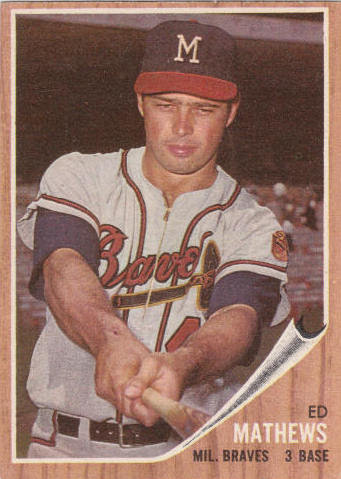
Marichal gave up three HRs in the game (shades of 2019!), including two by Eddie Mathews (who drove in five runs in a losing cause) but he had just enough gas in the tank to get the Giants over the finish line. Final score: Giants 7, Braves 6.

SEASON RECORDS: PIT 8-0, STL 6-0, SF 7-3, HOU 5-3, LAD 6-4, PHI 3-4, CIN 4-6, MIL 2-7, CHC 1-8, NYM 0-7.

The very early going in 1962 featured hot starts from the Pirates and the Cardinals, who had the good fortune to each play two teams--the Cubs and the first-year Mets--who staggered out of the box. The Pirates, who started the year 10-0, would have an extremely streaky season, with many winning and losing streaks in excess of four games; one of these streaks, down the stretch in September, would be pivotal in keeping the Dodgers in the race. The first-year Colt .45s (later, of course, the Astros) started well, but they would endure a brutal 6-29 streak starting in late June that would bring them crashing back to reality. They would give the Dodgers some trouble late in September, however, adding to the spiky drama that played out in the last ten days of the season.