Monday, November 17, 2025

10+ HOMER MONTH 2025 UPDATE...

DUST is (as always) settling upon the most recent MLB season, with awards presented and the hot stove's pilot light already engaged (the husky Josh Naylor re-signing with the Mariners--the third team to own him in less than a year...sign o''the times). 

We enjoyed the recent work of baseball's epiphenomenologist Sam Miller, who ratcheted together an apparatus to gauge a form of aesthetic greatness in the World Series that resulted in the improbable discovery that the just-completed skirmish between the Dodgers and the Blue Jays ranks #1 all-time.  While the tool probably needs one or two added components and a secondary pass with a weighting mechanism, it does capture many salient attributes for what it attempts to measure; while it's more "pebble-gathering" than "pebble hunting" (we await the baseball cap logo for Sam's Substack side hustle...), it has the makings of a satisfying book-length journey and we hope to see it in that form someday.

BUT here, of course, we're here to toss boulders around as we continue to measure the things we increasingly disparage (and often outright despise). Our urge toward the "micro", however--as manifested recently with our most outlandish proposal to date--keeps us safely away from the keys to the kingdom (at least for now...)

And so we return to our ongoing exploration of the power phenomenon that is often as maudit as it is Herculean--the 10+ homer month. When we left off (in our rather fallow coverage of the game in 2025) it was the end of April and there were only three such achievements, the most dramatic owned by the gargantuan Aaron Judge.

AT year's end, of course, Judge had three such months for the season--which was not the most for any player, however: that achievement landed on the broad shoulders (and possibly even broader posterior) of Cal Raleigh, who had four such months en route to a 60-homer season, setting a record for catchers and switch-hitters (and, of course, for switch-hitting catchers). 

Here is (borrowing shamelessly from the brash young Thomas Pynchon, who released his tenth novel during baseball's post-season at the ripe old age of 88) the "whole sick crew" of salacious sluggers, anchored by two likely Hall of Famers (Judge, of course, and Shohei Ohtani, both of whom became only the fourth and fifth members of a club we might call repeat offenders--sluggers with back-to-back 50+ HR seasons). 


As you'll see, Ohtani had the biggest homer month in '25, with 15 in May. No one else had more than twelve in a month (Kyle Schwarber did it twice, en route to 56 for the year--making him into the post-modern equivalent of Hack Wilson).

The truly great months (with OPS values in excess of 1.200) are highlighted in bold type (and garish color--we don't mess around, even when we're messing around!). There are five of them--and three belong to Judge. (The overall best month according to OPS, however, belongs to AL Rookie of the Year Nick Kurtz, who terrorized pitchers to the tune of a .953 SLG during July.)

All in all, there were 28 10+ homer months in 2025--which leads us to our updated TimeGrid™
presentation of the year-by-year history of 10+ homer months ever since Babe Ruth invented them in 1920...

The evolving record for most in a season is shown in bold type--it first hits double figures in 1930, and that remains the record until the expansion year of 1961, an occurrence that prompted the strike zone change two years later (and you can see the impact of that in the bolded box area in the sixties row).

The record was tied in 1995, shattered the following season, and the still-current record was set in 1999. Two seasons--2001 and the ridiculous year of 2019--came close to toppling it, however. (In case you are wondering what the seasons in red type signify, those are the three seasons with abbreviated schedules--by player strikes in 1981 and 1994, and by the pandemic in 2020.)

Note also that 802 of the 1333 10+ homer months have occurred since 1990. (That's 60% in the past 36 seasons, as opposed to 40% over the span of the first seventy seasons. We are all Sluggos...)

WE will close with another way to look at the increasing ubiquity of the 10+ homer season. It's possible to adjust the data to reflect the average number of such seasons per team over any given year. Recall that there were only sixteen teams in MLB for the first 41 seasons of the 10+ a month era (1920-1960).

As the chart shows, the first spike for 10+ HR a month sightings occurs in 1930, but subsides for most of the 1940s. It first became relatively ubiquitous in the 1950s (note the significant jump in the decade average, from just one such month for every four teams in the 40s to two out of every three teams in the 50s).

The expansion year peak in 1961 (1.28) set a record that wasn't exceeded until 1996, with the current high-water mark set in 1999. Once again, 2001 and 2019 (annus ridiculous) came extremely close to setting a new record. The temporary lull we saw in the first half of the 2010s is long forgotten.

The decade-level averages appear to be stabilizing at something similar to what was seen back in the 1950s. The values we're seeing in this decade, however, are more consistent that what was the case in the 2010s, and are consistently higher than what we saw in the 1950s, so by decade's end we could see an average that is somewhere between the levels in the 1990s and 2000s.

We are also seeing a rise in low-BA 10+ homer months (defined as those months were the Sluggos batting average in such a month is below .250). The yearly record for this growing sub-category is (not surprisingly) the ridiculous year of 2019--but we had seven of them in 2025. (The record-holder for this feat, by the way, is the poster child for the still-virulent "launch angle age"--yep, that's right: Kyle Schwarber--five times...and counting.)

Stay tuned....

Monday, October 20, 2025

270 GAMES A SEASON? ALL HAIL MICRO-BASEBALL!!

SO...as the baseball media's fall foolishness festers in its annual lockstep with Halloween, here at BBB we rise from an elongated bout of lethargy to show you yet another pre-embargoed future that, in a world where imagination truly reigned, would be a natural "strap-on" for a sport still desperately in need of a new form of foreplay.

No one other than us would ever propose such an obscenely overwrought overlay, but all that gestation time in a series of wayward wombs has once again led us gloriously astray...we envision you continuously shaking your heads in disbelief as we proceed. (It's the curse of our legacy--or will this be the legacy of our curse? We'll leave the curse words to you...)

WE all know that the game needs something both miraculous and malevolent in order for it to transcend its ever-increasing torpor. The old style of play, pooh-poohed by the quants but still visible in the embers being intermittently emitted from the game's funereal pyre, needs to be resurrected somehow. But doing so is increasingly elusive, due to the power-on-power imperatives that have foregrounded the action.

So, to save the game from its ongoing ouroboros moment, we will rip a page from the playbook of our execrable overlords and "flood the zone" with a patently egregious "strap-on" that some will call "baseball porn" (following in lockstep with the after-farce manifestation of "history as porn" that we are currently witnessing).

WHAT are we talking about? We propose that the game go inside its own anatomy and overlay a version of itself that can bring back a greater frequency of its now long-maligned one-run strategies. The two editions of the game can co-exist in a  "strange attractor" form of simultaneity that will allow the contrast between them to ameliorate the flaws within each style of play. 

The central insight about the added games (and you wonder... how the F can BBB propose adding 108 games to the current bloated schedule?) is that they will not be the same length as the long-sacrosanct nine innings we take for granted. What we call micro-baseball could also be termed "sudden death baseball" (though such a tern will likely be anathema in our currently fraught collective state of mind).

THESE games stem from the little-known fact that 50% of all "normal" games are scoreless after the first inning. The early innings of a game have a formless element to them that we can appropriate into a variant that recreates the immediacy of a close game in late or extra innings. It works like this: 

--Games are at least two innings long, with "extra innings" ensuing after that point.

--A trailing visiting team can invoke the ghost runner rule in the second inning in order to have a better chance to move the game into "extra innings." But, as in our current extra innings, it then applies to the home team as well...

--All innings after the second will use some variant of the ghost runner: the third inning will place the ghost runner at first base, the fourth will place it at second base. (The fifth inning will up the ante by adding in our dreaded "190-foot rule" to hamstring the outfield defense and create a more favorable run-scoring environment.)

THESE micro-games will be played as the opening contest ahead of the standard nine-inning game in two-thirds of the scheduled contests. Thus each team will play 108 "micro-games," the standings for which will be tabulated separately from the standard games. The two teams with the best records in "micro-league" games who are not otherwise in the playoffs will advance to the post-season.

And post-season play will incorporate "micro-baseball" by integrating the results of micro-games into the overall results. In a wild card series, for example, a team that wins two micro-games but loses two standard games is still in the hunt--the series would be tied 2-2 with a decisive standard game left to determine the winner. Similar approaches for the old three-of-five and four-of-seven series would also be put into play...

The recent bout of nostalgia about extra-inning games briefly ignited by Game 5 of the Tigers-Mariners series doesn't seem to have created a new wave of enmity for the ghost runner (an innovation that is routinely maligned but is, in fact, one of the more intriguing wrinkles for a game usually willing to marinate to the point of drowning in tradition). And that gives hope that we can build around it...

WHAT "micro-baseball" does is take the "sudden death" aspect of the extra innings as they are now constituted and push it to the front end of the (micro-)game. Fans will get a taste of tension right from the start as teams have to decide what strategies to employ to put runs on the board in a more focused way.

And the usage of pitchers--particularly starting pitchers--could very well become a significant feature of this conjoined competition. Right at this time we are seeing a transition to a six-man rotation, which will continue to stretch the bullpen on a nightly basis. Micro-games, which will mostly be decided within three innings, might prove to be a way to safely expand starting pitcher workload so that a teams best pitchers will be more visible: instead of five or six days off, we might see them after three or four days of rest for a couple of innings at the beginning of a "micro-game," followed by a full-fledge start two or three days later. Instead of 150 innings, we might more safely get them up to 190-200 again.

Such an addition will create a surge in strategies that go beyond the scope of what has been described here. Those who continue to hope for the game to organically transcend the flaws created by the neo-sabe/analytic incursion are whistling in the dark--baseball should seize upon the "strategic social engineering" that it's possible to insert into the game without rendering it unrecognizable in order to add previously untapped elements that can add texture, tension and nuance

FEEL free to scoff--we're long since used to that. But having a doubleheader two out of every three days and evenings at the ballpark is going to be incredibly popular. (Eighteen innings of baseball is too much even for a segment of highly-devoted fans--but eleven to fourteen innings split between a micro-game and a full nine-inning contest is going to be bonus time...something that gives folks more for their money.)

So let's recap. While stats for micro-games count (and make possible some new, asterisked records...), we can still keep a separate log for nine-inning games, so that the traditional approach is still retained as part of statistical lore. The results of micro-games are separate but have a modest effect on the post-season. (Fear not, feckless ones--there will be no micro-games in the World Series!

Micro-games will often end after two innings, but many will continue into additional innings, with escalating features and constraints that will keep players, managers and fans engaged in a more pressing and immediate way than is often the case in a nine-inning game (refer to the specific examples noted above). They will add something unique and tantalizing to a baseball landscape that is sorely in need of greater variety. 

CHANCES of it happening, of course--as with most of the meta-utopian schemes we devise here--are beyond slight. But if the Ivy League cabal should ever decide to test this idea, we are certain that it will catch on, and ultimately prove to be one of the pivotal innovations that will help restore baseball to the forefront of American sport.

Sunday, August 31, 2025

HR/G IN AUGUST '25: WHILE WE WERE SLEEPING...

DON'T look now, but...

HR/G veered upward sharply in August of this YOC (that's "Year of Chaos." in case you were wondering),  with taters launching at a rate of just over 1.28 per team per game. 

That's the thirteenth highest monthly HR/G average in major league history.

THE chart at right displays the HR/G since the "crazy year" (2019, when things just went haywire for the entire season). The pattern in 2025 is similar to what occurred in 2023--HR/G crescendoing in August at a level just under the most tatery April in baseball history (that would be April 2019).

(BTW, the data in the two rightmost columns represents the STDEV for HR/G in each season when we compare the monthly values. You can see the deviation ranges from four to nine percent from year to year.)

The escalation pattern for the past 5-7 seasons can be seen in the data at the bottom, where we included 2019-20 (top line) but decided to exclude them (bottom line) for contrast. When we do that, the June-August HR/G averages for the past five years flatten out, and the values for the edges of the season (April, September) decline.

 But as can be seen, there are all sorts of odd anomalies that pop up--note that HR/G in September actually increased over the August average in 2021-22, and took a steeper-than-usual drop last season.

WE don't see this as particularly alarming: it's just a variant of the usual pattern, delayed a bit due to smaller-than-usual jump from June to July that what we'd seen in 2023-24. 

Another reason why we aren't particularly perturbed about it is that runs/game did not spike at a level commensurate with the HR/G uptick.

We were simply lulled to sleep by what was a sluggish July, where the run scoring uptick also lagged behind the HR/G rise.

(Note that the STDEV between monthly R/G levels is a bit less than half what we've seen for HR/G.)

The other reason we aren't too concerned about the August HR spike is that the R/G level it produced (4.71) ranks only 182nd all time (out of 703 total months from 1901 to the present). The 2019 R/G averages in June through August are all in the Top 100, but still far off the pace set when hitters were more attuned to putting the ball in play and not so copiously swinging from the heels.

SO--whither September? We should expect a falloff, but the exact amount is hard to predict. Nationwide hot weather didn't spike until the middle of August this year, and it appears we'll have a warmer-than-average first half of September...so one might want to expect something more like 2023 than last year. =

Stay tuned...

Wednesday, August 20, 2025

THE BREWERS' "TWELVE-WEEK SCALD" IN HISTORICAL CONTEXT

YES, it's kind of a big deal. (Quoting the Raven--or those raven-haired temptresses that AI has made bewilderingly interchangeable...)

Bailey, Spencer, Kookie and Roscoe--what a rotation!
Those Milwaukee Brewers, bucking to be a viable "anti-sabermetric" alternative to the overlords of nattering numerological nuance, have just completed a 69-game stretch (hey, there's no eliding the entrendres here!) in which they won in just under 77% of the time (giving us a perfect excuse to festoon this entry with a image of Louis Quinn, the talky "tout" of that smirky "martini noir" TV series that was not set in Wisconsin). 

This has naturally attracted a lot of attention, particularly from the "phenomenological" wing of post-neo-sabermetrics (coughSamMillercough) who leer over the "old-style" apparatus of winning when it happens to coincide with a hot streak of rare and epic proportions. What follows from that is an effort to apportion the "luck" (which wriggles provocatively in the manner of those "AI babes") that we can see undulating in sabermetrics' "sanity check"--the Pythagorean winning percentage.

IT looks like Sam has found a way to apportion all of the trace elements which have coalesced into an unusually long, hot summer for the Brew Crew into a semi-convincing argument--but we look at what happened to the 2023 Atlanta Braves and wonder if all of that phenomenological virtuosity is simply a cadenza for cadenza's sake. 

To put the Brewers' gaudy 53-16 stretch in proper perspective, we need to look at all the teams who have equaled or surpassed it in baseball history. And, as always, we're the only ones who do that (as others fiddle while Rome burns). 

First, the generic context: how rare is such a feat? The TimeGrid™ chart (at left) tells us.

And, yes, it's plenty rare--only twenty times (not counting duplications*) in baseball history. 

THE question that then arises is what type of team has such an incredible hot streak? Is it a random kind of thing, where a team that previously was merely good, or possibly even mediocre (or worse) had some kind of miraculous turnaround? (And you might fix your eyes on that "1" in the slot representing 1914 for an example of such a team, the "Miracle Braves" who went from last place in July to the pinnacle of baseball success in October.)

But when we look at the full list of the twenty teams to meet or exceed the Brewers' .768 WPCT over 69 games, it becomes clear that most of these teams were much better overall than those Miracle Braves. That list shows that the Braves have one of the lowest full-season WPCTs of all the teams with this type of "twelve-week scald"...

ALMOST all of the other teams on the list have a much higher WPCT than the Braves (the exceptions: the 2013 Los Angeles Dodgers and the 2022 New York Yankees). Like the miracle team of 1914, the 2025 Brewers were under .500 when they began their extended "scald"--if we extrapolate their W-L record at the end of the scald out to 162 games, we'd see that they'd finish 103-59. That still places them deep in the lower echelon of overall quality amongst the teams who've flown so high for twelve weeks.

And there's no guarantee, of course, that they'll even do that well, as even a basic look at their stats will verify. We're not going to "go phenomenological," of course--we leave that to those who aspire to be more baroquely overwrought. What's clear from a look at the personnel on the Brewers' roster is that they have a solid but unspectacular group of offensive performers buttressed by the short-term transformation of Andrew Vaughn, whose performance in the past four weeks has given them superstar-level performance that has boosted their run-scoring ability to accelerate their success (29-4 in the last thirty-three games of the scald, as opposed to 27-9 in the first thirty-six). 

On the pitching side, the Brew Crew is getting a hot year from Freddy Peralta, and has been boosted further by the advent of Jacob Misiorowski and the triumphant return of Brandon Woodruff. But Quinn Priester is clearly not as good as his won-loss record (11-2). The no-name Brewer bullpen has improved over the course of the season, particularly the middle relievers. 

FLIP all of that into a prognosticative blender (now on sale at your nearest Target...) and we figure a cool-down, though one not as lukewarm as the Brewers were during of 2025's first third. A 20-16 finish over the final six weeks would bring them in at 99 wins, which would validate some portion of the outsized veneration they are receiving as the game's most recent "Mudville success story." 

What we may find, however, is that in 2026 the team will encounter an elevated level of adversity that they were able to elude for much of 2025, and like other teams that blossomed in unexpected ways (our long-ago favored 1969 Mets), were unable to sustain the lofty levels they touched. Teams that looked indestructible and downright monolithic in one year can crumble the next (1970 Reds, 2023 Braves). Some will regroup, others will not. It could be instructive for the reader to examine the list of "twelve-week scald" teams and see how many of them remained near to their overall season performance in subsequent years. 

AND note also how few of these teams wound up winning the World Series in the cool autumn aftermath of their scalds...

--

*There are many iterations of these high-flying spans that accrue from a search in the Forman et coeur database--we've removed all but the final manifestation of the "scald" for purposes of providing the essential lists of teams. (There's also a list that can be compile for such spans that extend from one season to the next, but that's a whole other story...)

Saturday, August 9, 2025

A DIFFERENT 40-40 CLUB--DOUBLES & HOMERS

ONE of the abiding passions here at the BBB (note how the thug-uglies have even sullied our acronym with their puerile and parlous legislation) is to examine the frequency of events occurring in the game.

And so it is with this post, where we slam together two big hitting events to look at just how often hitters manage to combine doubles & homers at mega-robust levels.

How robust, you ask? Pretty darned robust, actually. You should take this opportunity right now to guess just how often a hitter has managed to hit 40+ doubles and 40+ homers in the same season.

WE start with the TimeGrid™ (because it's trademarked, natch!) so that you'll see how rare this feat actually is--and because the clustering of this feat will become dramatically apparent.

The total (38 over a span exceeding a century) is indeed rare, and as you can see it is particularly aligned with periods of high offense. Note the 55-year gap from 1940-1995 that is broken up only by the lone occurrence of a 40+ 2B/HR achievement in 1973. 

WHO was that masked man? As the long chart below will reveal, he turns out to be the oldest man to ever achieve this feat. (We'll tease you with a few more clues--he was 33 years old when he did so; he exceeded his total of 44 HRs two years earlier, in the first season that he was freed from playing his home games in a ballpark that seriously suppressed homers. And he achieved this feat in the season after a more fabled teammate had perished in an airplane crash.)

Have you got it yet? Count down twelve rows in our master chart of all 38 instances of 40+ 2B/HR and you will find the answer.  That's right--it's Willie Stargell, not quite yet known as "Pops."

EXPLORING the list will reveal that the kings of this particular 40/40 feat are two first basemen--Lou Gehrig and Albert Pujols (who each managed it three times).

Those who did it twice--Babe Ruth (1921, 1923); Chuck Klein (1929, 1930); Hank Greenberg (1937, 1940), Albert Belle (1995, 1998); Todd Helton (2004, 2005); and David Ortiz (2004, 2005).

The only players on this list not in the Hall of Fame are Pujols and Belle. The former will make it imminently, while the latter will almost surely be bypassed by whatever gaggle of Vets Committee flunkies who will be in charge of voting over the next half-century. 

The other players who seem certain to evade induction in Cooperstown have been proliferating on this list in recent years--there are nine of these, beginning with Hal Trosky in 1936. We already covered Belle, the only player on this list who appears on it twice and is odds-on to be shunned by the Hall; he's followed by Ellis BurksRichard Hidalgo, Derrek Lee, Mark TeixeiraAlfonso (Don't Call Me Al) Soriano, Chris Davis and Josh Donaldson. (Miguel Cabrera will definitely get in, but things are more problematic for Nolan Arenado.)

We'd be remiss, however, if we failed to note that it is only Albert Belle who has managed to hit 50+ 2B and 50+ HR in the same season. That was 1995, which also happened to be a shortened season due to labor strife. Belle managed his singular feat in just 143 games...

We should also note that the only teammates to achieve a 40+ 2B/HR combo in the same season are David Ortiz and Manny Ramirez, who managed it in the Red Sox' curse-breaking season (2004). 

AND finally, a shout-out to a big, big name not on the list--Shohei Ohtani came close in 2024, hitting 54 HRs but stalling out at 38 2B. (He definitely won't do it in 2025--after 114 games, he's hit only 16 doubles.)

Tuesday, July 22, 2025

PRAISE (& SURPRISE) FOR THE "ZOMBIE RUNNER"...

 IT's not popular...

After all, no one is thrilled with the notion of "walking with a zombie."

BUT the designated runner rule that baseball implemented in 2020 has the backing of insiders, and isn't going away. 

It bothers purists and analysts alike, because it chips away at the game's laissez-faire underpinnings (on one hand) while (apparently) undermining the home-field advantage (on the other). 

And a majority of "analytic pundits" dislike it because it encourages one-run strategies, specifically the sacrifice bunt.

THUS the pejorative nickname--which is a shame, because baseball's Lords actually managed to create something tantalizing and strategic when they put this rule into play.

We will need a lot more data to accumulate before we will know everything about the impact of the "zombie runner." There are nuances in how the rule plays out that can't be quantified properly until we have at least 50,000 plate appearances in hand for extra-inning games played under its aegis. (Which part of the batting order is involved in the tenth inning is a variable that needs measurement--and that data doesn't seem to have been collected yet...and, sorry, but we aren't going to do it. Perhaps we can cajole the folks at Forman et soeur to do so at some point--but don't hold your breath.)

BUT we can measure a surprising trend in the general won-loss records of teams in 2025 who are employing the "lubricant" of the one-run strategy--the sacrifice bunt. 

At the All-Star break (roughly 60% of the way through the 2025 season), we find that 13 teams have made a sizable increase in their usage of the sacrifice bunt during extra innings (as measured by the statistic sacrifice hits per 100 PA, or SH/100).

As the chart (at left) shows, a comparison of the extra-inning won-loss records in 2025 for these 13 teams shows that their WPCT in such games has improved in excess of 100 points over their won-loss record in extra-inning games in the previous five seasons (2020-24).

The 13 teams in question had a .474 WPCT (369-409) in extra-inning games from 2020-24. Thus far in 2025, that WPCT has jumped to .579 (70-51).

Of course there could be random factors that are influencing these results, so we'll have to wait for (at least) the season's end to state with greater confidence that one-run strategies are having a greater impact on extra-inning success. But the fact that the teams employing the sacrifice bunt can be found across the game's quality spectrum is an encouraging sign.

Three of the 13 teams who've increased their use of the SH in extra-innings are under-performing their 2020-24 WPCT--the White Sox, the Mets and the Mariners. But, conversely, that means that upwards of 75% of the teams who've significantly increased their use of the SH in extra-innings games are doing better in such games.

WE don' t know if that margin of difference (.579 this year as opposed to .474 in the previous five seasons) will hold up, but its mere existence is a surprising (and pleasing) occurrence.

It leads to a more reckless, anti-purist impulse on our part: a possible limited expansion of the "zombie runner" rule to cut down a bit further on the number of pitchers appearing in a game and to introduce another strategic component into the game. Are you ready? Here goes:

--Beginning in the top of the eighth inning, whenever the game is tied at that point, the visiting team can call for the employment of the "zombie runner" for the balance of the game.  

Data indicates that about 13% of all games are tied going into the top of the eighth, so we will suggest that visiting managers be permitted to call for the "zombie runner" up to twelve times in a season.

Given that run scoring increases in innings where the "zombie runner" appears, the expansion of the strategy into earlier innings should cause a further decrease in extra-inning games. 

(Under this rule, the visiting team can also wait until the ninth inning and implement then--some of that will depend, of course, on which batters are available for which innings.)

IT's another strategic wrinkle that can add tension to games that are already as close as a game can get score-wise.

Would it become more popular this way? Hard to say--but we could go for it.  Of course, YMMV...

Wednesday, July 9, 2025

CAN WE GET "SLOPPY JOE" TO SHUT UP ABOUT SHUTOUTS?

IN two words: probably not. The one thing we know about Joe the P. is that when he gets the bit in his teeth, he will run with it for as long as he can.

It's true that shutouts are up thus far in 2025. And this is creating consternation in some quarters--specifically, that semi-elite niche of "veteran punditry" that fashions itself as a bulwark of "cutting-edge minutiae" that is all-too-often over-represented as being of oracular significance.

Such obsessive territoriality, as practiced with overly-energetic gusto by Joe (and, in a less egregious vein by Jayson Stark, avuncular avatar of the "it's never happened before, folks!" beat) is mostly a way to generate what we all have taken to calling ''content" (but with a diminishing sense of just how useful it actually is).

"Hold the pickle, Joe!"
SO how are these two handling the uptick in shutouts we mentioned? They are following an approach that has created an ongoing malaise in statistical analysis in the festering world of "baseball numberology" (and, yes, in case you were wondering, we are once again being sponsored by our long-time buddies at frightquotesrus.com). 

What is that malaise, exactly? It's the use of a counting stat to characterize a situation when a rate stat is actually needed to create proper historical context.

Joe the P. has, as a result, turned into one of his most maddening alter-egos--"Sloppy Joe"--as he milks this story even more shamelessly than we did ten years ago when we documented the diminuendo of the complete game. (Thankfully, that particular diminuendo got so dim that we could abandon it entirely...)

Now it's true that we might see the highest number of shutouts in history this season. (Also, the greatest number of 1-0 games--a subset that Joe has staked a claim to by following in the dubious "naming rights" approach pioneered by Bill James.) For Joe, such games are now called "Blylevens"--even though Walter Johnson actually participated in many more of them. That's the curly-Q approach that epitomizes the appropriative hubris of ''popular sabermetrics"--a brazen breeziness that dovetails into the clickbait world with a special brand of odious precision (but, as it turns out, is sloppy as hell).

Jayson Stark at least recognizes a nuance that has been left in the crockpot by Sloppy Joe: namely, that not all counting stats are equal. The 82 1-0 games in 1968 (and, yes, we're sticking with the term "1-0 game"...) occurred over a season span with about a thousand less games in a season than is the case now. That tells us that 82 such games in 2025 are a proportionately smaller percentage of total games played than was the case in 1968.

The same is true for shutouts in general. The 204 that we've seen thus far in 2025 represent 7.8% of all games; the 1-0 games are about 17.5% of all shutouts. We can generate such rate stats for these categories for all of the seasons in baseball history, and by doing so we can see where those rate stats reside in the data set. (Sloppy Joe could have done the same thing, of course, but the counting stat is what creates clickbait.)

WE can even do something that looks like actual analysis--and here is an example of that: a correlation between the percentage of shutouts in a season with the average runs per game (R/G) in the corresponding year.

Sloppy Joe suggested that the rate of shutouts in 2025 was at an all-time high: the diamond marker shown in red (OK, actually orange, the lighting is a bit dim in here, folks!)--the percentage of 7.8% mentioned above--gives the lie to such a claim. While that percentage is above the historical average for shutouts per total games (which is 6.5%), it is not close to the highest such yearly percentage in baseball history--a record set in 1908 (11.9%).

NOTE the diamond marker colored in yellow: that's the data point for 1968--the season of eternal trauma for those invested in defending the sabermetrics-to-analytics klatch from the nagging criticism that this twenty-year process has deformed the game on the field as it evolved into a runaway juggernaut. Any time anything starts to remotely look like what occurred in 1968, a barely-suppressed sense of hysteria starts to well up in these folk, who then start picking at the scab of the never-quite-healing wound that has continued to problematize the game for the past twenty years.

But let's look at that "red diamond" again, noting that it sits almost exactly in the center of our scatterplot. Is it both intriguing and harrowing that baseball is currently centered in its range of historical distribution with respect to R/G? Our expectations for run scoring have still not quite adjusted from what took place during the long "offensive explosion" (1993-2009), and the ping-pong effect that we saw during the initial phase of the "launch angle era" (2015-2021) seems to be subsiding into an ungainly phase of pitcher domination (as we predicted would be the case back in 2012). 

That red diamond (4.37 R/G, 7.8% ShO), representing 2025, shares one nearly identical data point with the previous year (4.39 R/G), but note that shutouts were a good bit lower in 2024 (6.6%). What the scatterplot suggests is that there is a random effect that comes into play in the middle ranges of R/G:  the distribution of such games can simply vary. While there is a generally linear correlation between R/G and ShO%, it is neither absolute nor monolithic in nature.

(And before we move on--what about that black diamond at the bottom of the scatterplot--representing the second-lowest percentage of shutouts in a season? What year is that, anyway? It's 1930...)


WE can see the variation at work more starkly (no pun intended...) when we look at how 1-0 games fluctuate as a subset of shutouts. The red diamond again represents 2025 (to date), with 18.6% of all shutouts being 1-0 games. That's merely above average relative to the historical average (17.5%). The pale green diamond represents 1968, where nearly a fourth of all shutouts were 1-0 games. The black diamond represents the ultimate extreme instance of this--30.4%--which happened in (that's right) 1908.

BUT this scatterplot also reveals another reason for the undercurrent of panic in Sloppy Joe's presentation of the counting stats. While this data has fluctuated up-and-down across time, the general direction it has moved is downward, a pattern that is particularly pronounced beginning in the late 1970s. Note also that the numbers have clustered at an all-time low for 1-0 games relative to shutouts in recent years. (Some of that might be traceable to the HR/G spikes we had in alternating seasons from 2017-21.)

We can see that clustering in the ''most/least" table (at right), which shows that four of the top ten years for the lowest percentage of 1-0 shutouts have occurred since 2017, with 2024 being the third lowest percentage in all of baseball history.

It's that pervasive recent decline in 1-0 games that has been turned around (thus far) in 2025, about a 40% jump from 2024. But 2025 doesn't have anything close to the highest rate of 1-0 games in history: in fact, it doesn't even have the highest rate in the 21st century (that belongs to 2014). 

AND it's really that sudden, unexpected uptick that has kerfuffled the feathers of Sloppy Joe, who's apparently decided he only knows from counting stats and erroneously inflated the situation by using those counting stats to overdramatize what is (at least partially) a random effect.

Others who've picked up on this in the media (that particular grapevine is thick and well-tended...) have asked for some kind of explanation as to why this is happening. But their attempts to do so (bad teams bloating the totals, the apparent deadening of the ball) did not bear fruit. The likely answers are: a) some of it is truly just a random effect; b) the continuing emphasis on hitting homers has created a strategic vacuum where teams in 1-0 games remain stubbornly reluctant to employ one-run strategies due to the lingering effect of the "launch angle hegemony," which causes extra games to fall into the 1-0 bracket. (Interestingly, though it's a small sample size, it appears that teams do attempt to steal at elevated levels in such games--but the success rate for SBs is lower than average.)

The situation is not without some interest, but Joe is employing sloppy methods to exaggerate its significance. While having him bound and gagged is tempting (especially as the Orange Menace goons attempt to normalize suppressive tactics ahead of an even more unseemly power grab...), we think there's at least some chance that this will self-regulate.

MOST important, though, is the maxim that a rate stat is more useful than a counting stat. Sloppy Joe needs to hold that thought instead of "holding the pickle"...

Friday, July 4, 2025

INTERLEAGUE STANDINGS AS OF 6/30/25

ONE of the oddest things about baseball in the 2020s is the simultaneous expansion of interleague play and the disappearance of data anatomizing the results of those games. We'll eventually reconstruct that data in total here (as time permits), but it is rather vexing to note that this subset of competition (now comprising almost a third of the overall schedule) continues to be given such short shrift. 

A key aspect of this will be evident in the interim 2025 results (shown below). The old model of interleague play was circumscribed in a way that did not create a random effect in the seasonal results--the games were played in monolithic chunks within the season. The new model creates a perpetually uneven distribution across the entire season. This will be evident in the data...

WE organized the data by league/division to show this randomness that insinuates itself even at the most granular level. For example: note that the NL West (near the bottom of the display) shows a massive range between the number of interleague games played by team in the division.

It's also important to capture the differences in distribution of games according to opponent quality, an area that has been almost completely ignored by fans, media, and analysts ever since the inception of interleague play. Our tripartite column structure summarizes individual team results by opponent quality (.500+, .499-, and overall) to show how opponent quality factors into this subset of game results.

IT shows a number of interesting things, of course--and you are invited to explore it all at your leisure. One of these that its noteworthy, however, can be seen in the interleague record of the San Diego Padres when broken out in this way. Among NL teams, the Padres have faced the most "good" opponents in the AL, and (as Jeff Angus would say if he were here...) have had their asses handed to them--a visual image that can be saved from pornographic associations only by substituting "donkeys" for "asses". Their current 3-15 record against good AL teams contributes mightily to the distance they find themselves behind the Los Angeles Dodgers (a nine-and-a-half game difference, which as of this writing constitutes the entire difference in the standing between the two clubs).

We leave you to examine this data in your own way, but let's close with a note about the uneven distribution of opponent quality between the leagues. So far AL teams have played far more games against good NL teams than vice-versa. They are playing better against such opponents than their NL counterparts have done against good AL teams (.458 WPCT to the NL's .423). But the distributions we see in the summary data at the bottom shows that there is a randomness skewing how these games are affecting the overall standings.

In the second half of the year there will be a great preponderance of AL teams playing bad NL opponents...what to watch for is a possible, even quite likely shift in the overall interleague results (bottom right of the figure) where the NL currently holds a slight advantage (184-180).

WE will revisit this data at the end of August to see if such is the case. Stay tuned...

Wednesday, June 18, 2025

WHO'S THE BEST NINTH INNING HITTER OF ALL TIME?

 DO you have a guess? Or do you already know the answer in your bones, based on that increasingly rare American commodity (common sense...)?

Ah, yes. We always hit a trough in this time of year, uncanny as it is (even after eighteen years). Our lifeline to the greatest ninth-inning hitter (who is still the greatest hitter of all...), the man who gave us our names, passed away on this day in 2007. There is something in the enduring afterlife of a seriously complex relationship that passed through DNA into the limbic system that organically takes us into a world more melancholy than the one described by Brian Wilson in his heartbreakingly beautiful, autobiographically-charged ballad, "'Til I Die." 

(As you know, Brian passed away a week ago, leaving behind a trove of tunes with a musical and emotional range beyond any & all of his fellow songwriters. Brian famously loved baseball: his favorite baseball player is #7 on the list of best ninth-inning hitters--which is incredibly serendipitous, since #7 happens to be his uniform number. Yes, that would be Mickey Mantle...)

IT turns out that there are three Yankees in the top 7 ninth-inning hitters. In between we have the battle between two left-handed hitters who are each being paid more than the GDP of 94 world nations. Right now Shohei Ohtani is #4, while Juan Soto is #6. (In between them is the only man we know of who hit over .400 in the ninth inning--Ty Cobb.)

That leaves two right-handed hitters left out of the three not-yet-named:  #2--Joe DiMaggio, whose .690 SLG in the ninth is still dwarfed by the lone man in front of him. #3? Hank Greenberg, who seemed to specialize more in ninth-inning doubles: his ratio of 2B to PA is the highest of all. 

But let's not ignore the last three in the top ten while we remind you that Dad saw all of these guys save for Ohtani and Soto--and one other slugger, whose presence here at #8 on the list will likely be surprising: Pete Alonso. He most certainly saw eventual teammates Ted Williams and Jimmie Foxx--Williams making the list despite a shockingly low batting average (.282). Who knew that the game's first scientific hitter went for the downs in the ninth?

SO that leaves only #1, and while he didn't really have a candy bar named after him like Reggie Jackson--who, somewhat shockingly, ranks #400 on the list(!!)--he's so far above everyone else that it is truly laughable to contemplate. He ranks #1 in HR (55), #1 in RBI (172), #1 in OBP (.489), #1 in SLG (.770!), #2 in hits (behind Cobb and Mel Ott, who's #12 on the list). 

Of course it's Babe Ruth! We neglected to include his rank in OPS, which is (duh!) #1...but look at the actual number: 1.259. (Well, yes, you could've added that up from what was provided above, but who has time for that when ICE is playing a pestilential form of paintball with America?) 

That's 131 points of OPS above Joe D., 202 ahead of Ohtani, and (using the abacus behind my back like Jimi Hendrix...) 463 points higher than Mr. October. 

HERE are the top 20 hitters in the ninth inning as ranked by OPS. Some surprises await in the 11-20 slot:


Our break line is at 1.000 OPS, which creates a population of just seven hitters, including Brian's Mickey, who walked the most in the ninth inning. But in the .950-.999 range we have some names that will raise eyebrows (possibly due to a semi-relaxed sample size, which searched for those with as few as 150 PAs in the ninth inning--hello, Yordan Alvarez...but it's impressive nonetheless, n'est-ce pas?).

AND Bill Terry (.370 in the ninth!) ...Roy Campanella...and two more Hall of Famers (Chuck Klein, at #11 just a fraction behind Foxx;  Larry Walker at #19). Possibly Joey Votto (#19) will join them (possibly). And a little shout-out to Dave Justice, definitely at his best in the late clinches (as Halle Berry might still admit if you caught her in a forgiving mood). 

But give it up for the two WTFs here: Larry Sheets and Chet Laabs. A couple of non-descripts who nevertheless stood tall in (what is usually) the final frame. 

WE'LL pick through some of the lower depths in this breakout and show you some shocking ninth-inning numbers in a subsequent post. Of course, not all ninth inning at-bats are charged with the drama of a game on the line but there's enough romance here to give this breakout some sizzle. Especially when it reinforces an assessment that nearly a century after the Bambino played, is often subject to quibbling. 

And thanks for the stories, Dad. The way you told them, it was just like being there with you... 

Thursday, June 12, 2025

CATCHING UP WITH THE MONTHLIES: 7+ TRIPLES IN A MONTH

Would you believe?
YOU knew we would return to this...and you knew, sooner than later, that the subject (or is that the sub-subject?) would turn to triples.

But before we give you the data on most triples in a month, some context that might even prove relevant to what you'll shortly see. We saw that the record for most doubles in a month and the record for most homers in a month is the same: twenty. The seasonal record for both of these stats is a bit over three times as many as the record for a month: 20/67 for doubles, 20/73 for homers (or, 20/62 for folks who want to eliminate all of the hitters in the 1998-2001 time frame from consideration). 

We won't turn this into a diatribe against all that flat-earth stuff (even if we advertise ourselves as embodying "the lost art of the diatribe"). Instead, we invite you to work backwards with us--definitely not our usual modus operandi!! 

NOTE that the record for most triples in a season is 36, held by Maxwell Smart's boss: Owen "Chief" Wilson. (And if you got that joke, our condolences.) So if the ratio we've seen for doubles and homers holds true, what would that seasonal total "ratiocinate" down to for the most triples in a month?

Have you got the answer? It's 11. And it just so happens that the record for most triples in a month is 11. (It's not held by either the Chief or Maxwell Smart, either.)

The record-holder (or the culprit, depending on what mood you're in...) is Larry Doyle--"Laughing Larry" to his friends...and he must be laughing even now as he realizes (posthumously, of course!) that he holds the longest-standing record in baseball history. He set it in 1911, one season before Max's boss set the seasonal record. 

It was May 1911 to be exact--and it was doubly (er, make that triply) impressive because Doyle did it in a month where his team, the New York Giants, played only 24 games. (Many monthly records tend to cluster around months where extra games were played due to the uneven nature of the baseball schedule in "olden times.")

It wasn't even that great of a month for Doyle at the plate--not bad, mind you, but (as we'll see below), some of the also-ran contenders for most triples in a month were simply astonishing offensive performances--including three in which the batters hit over .500 for the month in question. 

AND, of course, you'll never have heard of those guys...just Shoeless Joe Jackson and Ty Cobb, that's all. They had those months back-to-back in 1912--yes, the year Max's boss hit 36 (and also managed to hit nine triples in a month, which rates a twelve-way tie for third place). Three hitters banged out 10 triples in a month--Mike Donlin in 1903, Joe Cassidy in 1904, and Amos Strunk in 1915. But let's honor the heavy hitters who posted stellar overall months when hitting at least seven triples...


THERE are several Hall of Famers on this list: Cobb, Rod Carew (the second-to-last hitter to hit 8 or more triples in a month), Edd Roush, Enos Slaughter, Al Simmons, Goose Goslin), but there are also a few folks who are considerably more obscure: Freddy Leach, Cy Seymour, Frank "Wildfire" Schulte, Al Wickland, Pete Reiser, Cozy Dolan and Carl Reynolds

As you can see from the numbers, however, they all raked in these high-triples months.

That was not quite the case for Larry Doyle--though his month wasn't exactly bad, it was just...a bit lesser. However, he's the record holder...and likely to stay that way for the rest of recorded time.

WE close with our TimeGrid™ chart (at left) which will confirm that the monthly triples record is an artifact of baseball's deep past. 86 of them (and 86 was Maxwell Smart's "agent number"...) occurred from 1901-1930, with just 25 more instances in the past ninety-five years.

THE last hitter with seven triples in a month? Jose Reyes, in 2011--exactly a century after Doyle set the record. The last hitter with eight triples in a month? Carl Crawford, in 2004. The last with nine in a month? Pie Traynor in 1931.

We are not quite sure how to compute the odds that we will see anyone hit seven triples in a month within not only our own lifetimes, but in the lifetimes of our generation's grand-kids. And, as Max would say, would you believe it even if you saw it with your own eyes? 

We think not...

Monday, June 9, 2025

WHO'S THE BEST 9TH INNING HITTER (ACTIVE PLAYER DIVISION)?

SPOILER alert: the answer to our question is not going to be particularly surprising.

But we thought this sub-category of hitter performance would be intrinsically interesting: it's part of the seemingly endless array of "splits" breakouts, but is one that's been systematically overlooked in favor of more specific "situational" notions.

While it's a bit nebulous compared to such other breakouts, the "ninth inning" has its own aura, a kind of romantic resonance that conjures up the game's more consciously structured narrative--it's the kind of thing that semi-fabled faux-phenomenoligst Sam Miller might swoon over (though there's probably too much data available to provide those "Husserlian goosebumps" he seems to covet most). 

It's that "last chance" thing that injects something at least akin to romance into the limbic systems of baseball fans--a longing for drama, for clutch performance, for the twist ending. And it makes some of us hope for empirical results within the data that create surprise and wonder (even if the odds of such occurring are even more remote than the prospects of a last-minute change of fortune).

SO we now present to you the hitters who hit well in baseball's "end state"--the active hitters, that is. (We'll return shortly with a similar list for those who are no longer playing.)


We've limited the list to those with at least 150 plate appearances in the ninth inning, with color coding that breaks at various OPS levels (.975, .900, .875, .850, .800). (The full list contains nearly 250 active players, though we're obviously not going to display it all.)

The two names at the very top--Shohei Ohtani and Juan Soto--are, as noted earlier, quite unsurprising (but impressive nonetheless). Pete Alonzo's presence in the topmost reaches of this ninth-inning pantheon might be more of an eyebrow-raiser, though. (As might also be the case for Christian Yelich, whose .323 batting average is noticeably more robust than his overall lifetime BA.) 

And what about Tyrone Taylor? (We suspect sample size will rear its head in his case...but you never really know, now, do you?)

The romance of the ninth inning injects a twinge of sorrow when we see the performance level of Anthony Rendon--the possessor of the highest ninth-inning BA of anyone still currently on (or at least adjacent to) a 40-man roster. 

WE can also see why the Dodgers would feel confident that they might create what was called "four o'clock lightning" in the Bronx during the late 1930s/early 1940s as Yankee hitters (led by guys named Joe DiMaggio, Charlie Keller and Tommy Henrich) would often turn around ballgames in their latter stages (with a good bit of it happening in the ninth inning). The elevated ninth-inning performances of Ohtani, Mookie Betts and Freddie Freeman (#1, #8 and #9 on the list) suggest that a similar "late lightning" effect has descended upon Chavez Ravine.

(Though we should note that there's no current way to look at ninth inning performance in terms of home vs. away games--one of the lingering limitations in the data readily available at Forman et soeur, etc. Which is odd, because given the romance of the "ninth-inning turnaround" you'd think that its occurrence would be more definitely documented--how many times does the visiting team turn the game around in the ninth? (We know that it is quite rare--but since we track "walkoff wins," why don't we have the analogous quantification of the "visitor turnaround" inning?)

THE surprises in this "ninth inning data" are to be found far from the top performers. The more pedestrian performance of Aaron Judge, for example, raises at least one eyebrow. More shocking, though, is the discovery of big-name hitters who seem to crumble in the ninth inning, as shown below:


Cal Raleigh, currently tearing things up in the AL with a homer spree eclipsing even the mighty Judge, looks much more like his old self in the ninth. And it's surprising to see stalwarts like Nolan Arenado and José Ramirez down in this region, along with sluggery types such as Jorge Soler, Anthony Santander and Kyle Schwarber

YOU are now officially encouraged to ponder who will be at the top of an all-time "ninth inning hitter" list (for those who are more definitively retired than Anthony Rendon). That will be coming to you soon...

Saturday, June 7, 2025

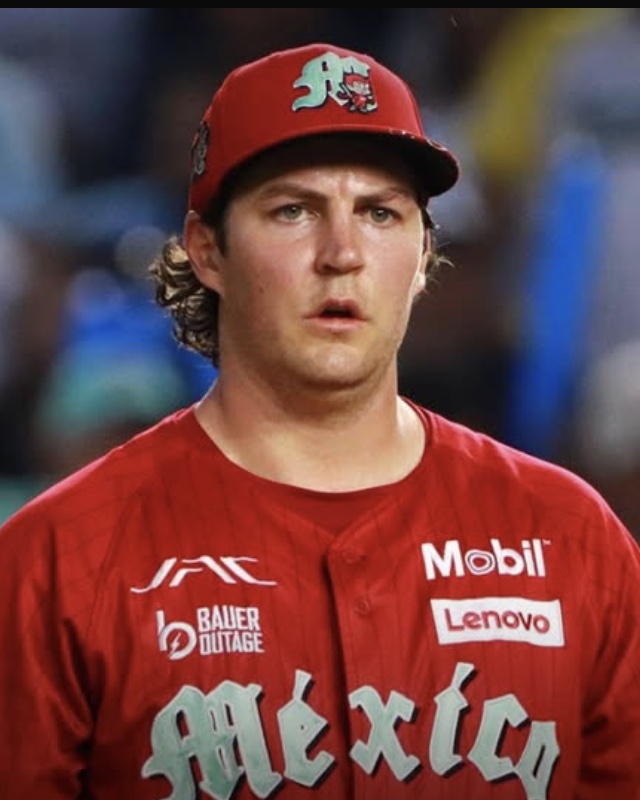
THE A's HAVE NOTHING TO LOSE BY SIGNING TREVOR BAUER

IT is long past time to jettison the ongoing hypocrisy that has prevented the embattled Trevor Bauer from a chance at redemption. 

That has been made more manifest than ever with the recent decision by shyster commish Rob Manfred to reinstate the formerly "unholy eighteen" (with Pete Rose leading off, and Joe Jackson batting third) for Hall of Fame eligibility. 

The pyramid of "moral offense" that was baseball's ironclad perimeter has been breached. But what happened to Trevor Bauer has much more greyscale than baseball's (thankfully crumbling) black-and-white pseudo-pieties. If gambling is now an offense similar to the use of illegal substances, then it's clear that Bauer--who served his ban and was then ostracized from MLB, should long ago been given a chance to resume his career in American baseball.

It goes without saying that Bauer has rubbed many people the wrong way from the dawn of his baseball career: he created conditions that resulted in his ostracism. And the actions that created a firestorm of controversy over what now can more than credibly be seen as a sexual blackmail scheme continue to unfairly prevent him--virtually alone amongst all his peers--to resume his career.

(YES, there is the case of Julio Urias, a repeat offender of domestic violence. And, of course, Wander Franco, embroiled in a queasy-at-the-very-best transactional sexual "arrangement" that has all the fragrance of a leaking septic tank. Franco's legal fate is still TBD: he may well be looking to play baseball in prison. Urias, who pled no contest to charges brought against him, will come off the MLB restricted list next month: the jury is out as to whether anyone will give him a chance to redeem himself.)

It's now getting very late in the game for Bauer, who's 34 and may not have enough left in the tank to be the top-flight pitcher that he was in 2020-21. He's currently back in Japan, after a stint in Mexico last year. He's pitching well, and it's clear that there are teams with gaping holes in their pitching staffs who could easily give him a chance to redeem himself, both on the mound and in the clubhouse. 

One of those teams, ironically: the Dodgers, whose relentless skein of pitcher injuries in the recent years can be seen as a kind of payback for their shattering lack of empathy and rush to judgment regarding Bauer. (The monolithic, stuffed-with-money organizational behemoth is a troubling analogue to the plutocratic malaise currently enveloping an imperiled American democracy; while the Dodgers stop short of overt criminality, they embody an unseemly monopolistic approach to talent acquisition: it is no wonder that they have wrested away the "Evil Empire" monicker from the Yankees.)

IT would be wonderful if the Dodgers, persistently plagued by what is now approaching an entire roster's worth of pitchers residing on the injured list, would somehow be forced to turn to Bauer. But even we know better than to think it could ever come to that, as perversely appealing the notion is. No, the two 2025 teams who have absolutely nothing to lose by giving Bauer a chance are the Colorado Rockies (currently 12-50) and the FCG Athletics. (FCG is not a location: it's an abbreviation for "Floating Crap Game," which perfectly describes the slowly escalating, claustrophobically bizarre limbo of the former Oakland franchise, now ensconced in a minor-league park where their ballpark bunkmates, the Sacramento Solons, who--in another cruel irony--are the AAA affiliate of the San Francisco Giants, whose long-ago veto of the A's bid to build a stadium in San Jose was a key piece in the A's ever-exploding puzzle.)

Clearly the A's are a perfect psychological fit for Bauer, though they are highly unlikely to admit it. And, for those still wanting to punish Bauer further, assigning him to a team whose current ballpark is a living hell for pitchers should add some poisoned sprinkles to his ice cream cone of "forgiveness." 

AND it's also clear that Bauer would, in fact, willingly embrace such a scenario (we stop short of calling it a full-fledged "opportunity"). We suspect that he knows that whatever surfaces for him will be some form of a "stacked deck." That said, both parties have nothing to lose--and the A's current battle fatigue (given that in the last 30 games, they have matched the Rockies with a 6-24 record) should prompt them to try just about anything/anyone to stop the bleeding that oozes from the pitching mound whenever they play.

So, yes--Bauer the banned pariah resurfaces with baseball's vagabond team. It's a peculiarly American story, isn't it? But we know that A's owner John Fisher--the Coddled & Deluded One--would never stand for it. It would involve actually owning the travesty he has created (and what those directing things within the septic tank of baseball's uniquely "fragrant" form of plutocracy have callously enabled). 

WE hope that Bauer gets his chance--but we are not holding our breath. 

Monday, June 2, 2025

W(H)ITHER THE ROCKIES??

Note: the "C" here does not stand for "Colorado"--read on!
COULD the lowest of the low turn out to be the team that plays at the highest altitude?

That's what a larger & larger slice of the baseball media is surmising, as they unerringly zero in on the "catastrophe scenario" that has become legion in all aspects of American life--reaching its nadir last November, bringing us the punctuated disequilibrium of chaos on top of travesty.

Thus the Colorado Rockies--always the game's square peg--have become the latest franchise catastrophe in a roundelay that no longer insulates large markets from baseball's version of the "drunk tank." They've been bad for quite awhile, but in a low-key way: given that they seem to exist apart from everyone else, creating cartoon-like games in the thin air of their home park, it seems that everyone (including the Rox' owners) have just considered their foibles to be fait accompli.

BUT now they've gotten so bad--and the timing of their badness is in sync with a recent epidemic of catastrophic teams, all seemingly intent on eclipsing the gauntlet of ineptitude thrown down by the 1962 Mets--that they can no longer be ignored. As of June 2 in this catastrophic year of 2025, they've started the season by winning just nine times in fifty-nine games--the worst start of a season by anyone.

And the media is all over it, with the requisite allusions to the 1899 Cleveland Spiders, who won just 20 games in a year where 95% of their talent had been strip-mined away from them by something that we are witnessing in full force in 2025: massive, pandemic-level corruption.

But even the Spiders won 11 of their first 59 games. Of course 11-48 was the best part of their season...after that it was le deluge: the ravaged creepy crawly folk went 9-86 (!!!) the rest of the way. They finished with an inverse flourish, losing 40 of their last 41 games. (Those with a serious masochistic bent are directed to J. Thomas Hetrick's Misfits! for an exhaustive exhumation of this singular travesty. "Exhausting" might be the better adjective, however...)

It's so convenient: our wise guy only has to change one letter
in order to re-use this sign in 2025...
IN keeping with the malingering malaise that is cascading through America at this moment, though, it appears that a not-insignificant portion of the media is beginning to root for a kind of "Spiders redux" outcome for the Rockies. It's easier to get into this variant of "doomscrolling" when it kicks in at the start--none of this "collapse at the end" nonsense...if you're going to stink up the joint, fold early and stay folded, goddammit! Even though some folk were ready to invoke the star-crossed Spiders last year when the White Sox found themselves in a endless "flush cycle," the problem for the wise guy in the picture was that the Sox waited too long to metastasize--they'd already won too many games when they went into free-fall. 

SO here are the Rox (not the Sox...) doing it from the get-go and keeping the foot off the pedal as their opponents rip them apart. Some folks are going to be really annoyed if they emerge from their acute catastrophe phase and become merely bad. But that's what is likeliest to happen: unlike last year's catastrophe model, they cratered too early to wallow in decrepitude for an entire season. 

How do we know this? Admittedly, the data is not 100% foolproof, but it has had an unwavering pattern when ineptitude is the sole reason at play--remember, the Spiders' season in Hell was arsoned into inferno status by corruption. That's not in the picture for the Rox.

AT left, here are all the teams with 59-game collapses in the same forlorn region as Denver's high-flown low-lifes. It turns out 9-50 isn't the worst such skein, even leaving the Spiders out of it. The 1916 Philadelphia A's had the worst of it--four times, bottoming out at 4-55. Last year's "catastrophe model," the White Sox, went 8-51 from July 4 to mid-September and looked like a lock to get under those fabled Metsies--but they only got half the job done, losing one more than "Casey Stengel's follies" but winning one more as well. 

The 2021 D-backs also had a 9-50 stretch from May into July, but they won 52 games and wound up being merely bad. Same with the 2012 Astros. The pattern is the same for all the other teams in this same region of 59-game collapse: the 1969 Padres, the 1949 Senators, the 1932 Red Sox, the 1923 Boston Braves, and a troika of A's teams (1915, 1937, 2023). 

WHAT happens, as the "Outside Span" column demonstrates, is that all these teams have an inverse regression to the mean and become merely bad over the balance of the season. Taken as a group, and adjusting the end-of-year projection up to apportion 162 games to the reeling Rox, these teams went 39-64 in the remainder of the season. (As you can see, that's exactly the record that the 2023 A's posted after their eye-popping start that season.)

When we apply that aggregate to the Rox, and add it up, it suggest that they will finish the season with a 48-114 record. Granted, that is somewhat worse than merely bad, but neither is it an all-time record for futility.

TO give you the other side of the range--the worst "worst case scenario"--we point to the Rox' "Pythagorean Won-Loss Record" or "PWP" thus far in '25 (which is figured by a formula using their runs scored vs. their runs allowed). Right now, that works out to a .220 WPCT. If they can hold that pace from now to the end of the season, they'd finish with a record of 36-126, which would indeed be the worst since 1899.

There are twelve teams shown in the table above: ten of the eleven on it before the Rox joined them all cleared the 1962 Mets' .250 WPCT with relative ease. Last season's Sox pulled out of a mid-season free-fall (7-44 over July and August) to post a merely bad 10-15 record in September to partially evade a desiccated date with destiny. Chances are extremely high that the Rox will do the same over the balance of the 2025 season.

BUT, then again..."now batting third for the Rockies, Arthur Rimbaud"...

Stay tuned!